Stop me if you’ve heard this one before: For almost twenty years, I had no idea I had obsessive-compulsive disorder (OCD) because I thought people who had it were scared of germs and washed their hands a lot, or maybe they checked to see if the stove was off over and over again. Even when I started to piece together that my distressing thoughts were obsessions, I still thought I was missing the C in OCD, the compulsions. That’s because I had mental compulsions—things like praying for God to make the thoughts stop, ruminating, and digging for answers from my childhood that might explain where everything had gone wrong.
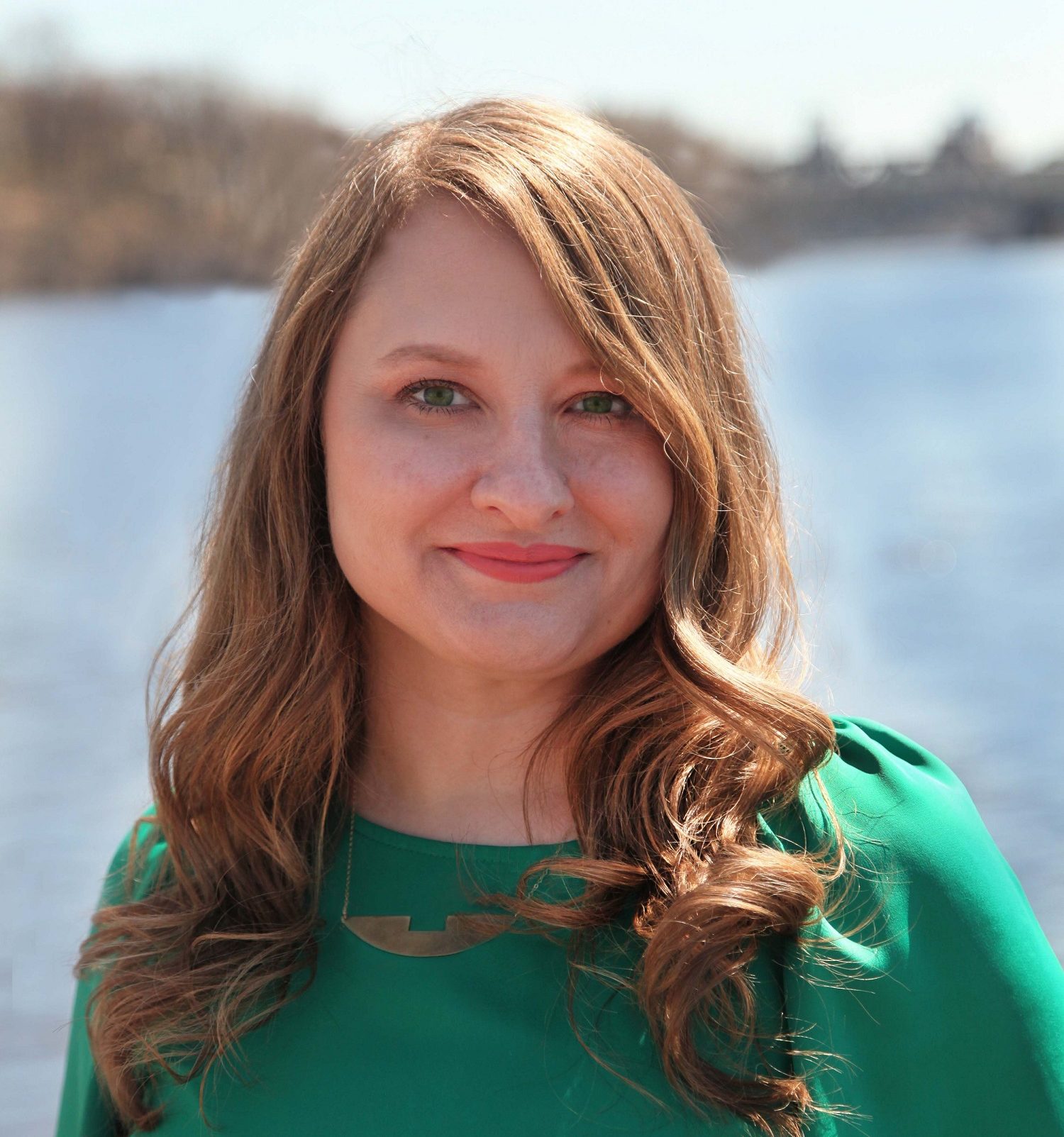
Today’s guest, OCD therapist Mary Feldman, is passionate about treating mental compulsions, and I’m so happy to get her take on how they differ from obsessions, how they can be treated, why she offers classes in addition to therapy, and more. She’s also a caring and compassionate person, which is a huge asset in someone you’re trusting with the thoughts that scare you!

You focus a lot on mental compulsions, something people with OCD (including me) confuse for intrusive thoughts. Can you explain how they differ?
This is where a lot of people with OCD get stuck. The difference has to do with effort. Intrusive thoughts are out of your control. They’re automatic, so they require no effort from you. You have around 60,000 thoughts a day, and intrusive thoughts fall into that bucket of automatic thoughts you don’t get a say in.
A mental compulsion is different because it requires effort. You have to conjure something up in response to a thought. It happens invisibly, but it takes energy and intent, so it’s not the same thing as an intrusive thought. So, what separates them is how you’re engaged. I like to think of it as spam email (I can’t recall who came up with this metaphor!). You can’t really control what lands in your inbox, but you can control whether you click on it and answer it. That’s the difference between thoughts and thinking.
Why do you think it’s important to pay some special attention to mental compulsions?
Because mental compulsions do the same thing to the OCD cycle that physical compulsions do. People often feel like they carry less weight or impact because they’re not observable. But a behavior happening in your head still has impact. If it functions as a compulsion, it reinforces the cycle. If we don’t address mental compulsions, we aren’t addressing the full process of OCD, which has real consequences for long-term recovery outcomes.
Tell us about your courses. Who are they for? How will students benefit?
My main course is Mental Compulsions Mastermind. It’s a comprehensive resource for people who feel like they know what OCD is but are still stuck in a loop of mental rituals like rumination, mental replaying, and mental checking. It includes eight modules of course content (videos, worksheets, pocket-guides, and so on), group Q&A calls I lead, and access to an online community space.
The course applies to all presentations of OCD, but the focus on mental compulsions is very intentional. The students have been a wide mix. Some didn’t have access to OCD specialized therapy or resources at all, so the course was their way of getting this knowledge for first-time recovery. For others, it filled a gap they felt they were missing in the resources they already had. One student had done nine years of ERP and ACT therapy and kept relapsing. She benefited because the course is so fine-tuned to mental compulsions. It really depends on the need.
How did you decide to create these courses?
Mainly because of the gap in resources around mental compulsions. I’ve worked in higher levels of care for OCD, and I have OCD myself, with a primarily mental-compulsion presentation. I saw how few resources really dove deep into this, and I wanted to fill that gap.
I’m also passionate about the fact that we have an OCD care crisis, and it isn’t just a US problem. It’s worldwide. I’ve had students in Canada, the EU and the UK, Nigeria, Puerto Rico, and Australia. The lack of resources and access to care is everywhere, so I created this course to act as a supplement while we keep fighting that crisis.
To be clear, a course doesn’t replace therapy. The research shows time and again how much the therapeutic relationship matters for recovery from any mental illness and I am not here to dispute that. That said, the more resources we can create and the more hope we can instill, the better.
Although anyone can have OCD, access to treatment and information isn’t equal. How can therapists close some of those gaps?
From a clinical perspective, therapists need to keep advocating and speaking up about treatment access, connecting with their communities, and helping people learn. I think the larger organizations can play a role in expanding access to quality trainings as well.
This next part, some people may disagree with, but: getting involved in politics is really important. That includes helping elect people who will prioritize equality. OCD treatment access is heavily influenced by systemic racial and economic injustice and copious amounts of inequality. Those inequalities are upheld by policy.
So, therapists need to be politically involved. I’m not saying every therapist has to run for office or be on the front lines of campaign trails at all times, but we can’t afford for political advocacy to be a low priority for mental health professionals right now. Therapists can help close these gaps by not turning a blind eye to the injustices that fuel the mental health care crisis.
Sharing free resources, advocating on social media, talking to your communities, and doing outreach are all wonderful. But there are deep systemic issues that a carousel on Instagram, or a lunch and learn with a local clinic can’t address. So get involved, make sure you’re voting, make sure you’re speaking out. Therapy is and always has been political.
Dealing with my OCD has helped me take non-OCD doubt and uncertainty in stride, too. I’m comfortable telling a friend I might not get a job I really want and all I can do is wait for more information, and that friend might tell me I need to think positive and put a winning energy into the universe. Is there a way I could respond to a comment like that without totally shutting them down? What advice might you give me if I were your client?
It depends on what you’re comfortable sharing. Some people are fine saying, “I have OCD and I’m trying not to seek reassurance, so I appreciate you telling me to think positive, but I’m going to try and let myself feel uncomfortable.” Someone else might just say, “Yeah, maybe,” and leave it there. I tend to be a little more firm, so I’d say, “That’s not super helpful for my situation.”
This is probably the most “therapist” answer I could give, but it really does depend on the person.
You have OCD yourself. Can you tell us about some of your early symptoms? How did you realize what you were experiencing was OCD?
I have a family member with OCD, so I was able to recognize it in myself. I did a lot of ruminating, a lot of researching, and mental compulsions constantly. It peaked around 19, but it first showed up when I was about nine. I was really afraid I’d tell a lie by accident, so I confessed a lot of unnecessary things.
How did you decide to treat OCD?
I was lucky enough to get a job at a partial hospitalization program for OCD and related disorders while I was still in grad school. Working there, I saw the freedom people with OCD could create for themselves, and it was so empowering and fulfilling to play a small part in that. So I doubled down and kept treating it.
If you could give just one piece of advice to someone with OCD, what would it be?
See how much willingness you can practice: willingness to coexist with fear, with doubt, and with your thoughts.
So much of OCD’s messaging boils down to “you can’t handle this,” whatever “this” is.
“You can’t handle the possibility of something bad happening.”
“You can’t handle feeling anxious at this event.”
“You can’t handle an intrusive thought while you’re driving.”
“You can’t handle not knowing for sure whether you’ll develop some disease.”
OCD scores points when you underestimate yourself. When you practice any willingness, even the tiniest bit, it makes a huge difference. Tell yourself, “I’m going to let myself feel anxious for a minute before I try to fix it,” or “I’m going to allow myself not to know for sure for two more minutes before I Google.” Those small moments of defiant willingness to coexist with discomfort add up.


